Showing posts with label Step 6-Judging. Show all posts

Monday, November 18, 2013

You're Invited!


God doesn’t call me to judge you. God calls me to love you. ~Joel Osteen

I’ve been thinking about labels and reactions to labels. We sometimes reject the whole concept of labels, because they are often used to limit, or to divide “us” from “them.” We use them to dismiss, to separate, to stereotype, to discriminate, to judge. In the United States, we are all too painfully aware of the damaging and tragic use of labels based on race, gender, religion, nationality, sexual orientation, and physical or mental disability.

So is the answer to throw out all the labels? Maybe. On the other hand, maybe the problem isn’t with the label itself but with how we use it.

For example, my son James is autistic. When he was a boy, he was mainstreamed in a regular classroom. His behavior seemed odd to other children. The children who tried to talk to him or include him in play were confused by behavior they didn’t understand. They were sometimes even afraid of him. They stayed away from him.

I made a decision to give them information, to use a label and explain it. Every year, near the beginning of the year, the teacher and I would arrange for someone to come in and talk to the kids about autism. James was not present for these discussions so that the kids could freely ask questions.

Without exception, once the kids had some knowledge, they showed tremendous acceptance and compassion. They went out of their way to include James.

Towards the end of his last year at that school, the PE department put on a presentation, showcasing the skills that the kids had learned. It was all very impressive, and the parents’ applause was constant. Then it was James’s turn. He started across the stage but then hesitated. Everyone got just quiet enough for me to hear one of the kids near him encourage him. “You can do it, James.” James tucked his head and did a crooked somersault. He stood up beaming. The whole gym erupted in applause. Tears were streaming down my face.

Labels don’t have to divide us. They can invite us in. Knowing that someone is from a different country, or practices a different religion, or is of a different ethnicity can be an invitation to get to know that person. We can be curious instead of judgmental. We can be welcoming instead of fearful. We can celebrate our differences, and in doing so, we can move past all labels and find our common ground.

Enjoy this short video of a dog who sees past labels.


related posts: The Water Is for Everyone; There Is No Them

Saturday, October 5, 2013

Neti, Neti


To organize is to destroy. ~Lao Tan, quoted by Thomas Merton in The Way of Chuang Tzu

“Neti, neti” is a Sanskrit expression from ancient Hindu texts. It can be translated as “Not this, not this.” The words are meant to express the inexpressible, what the Tao Te Ching calls the name that cannot be named, or the way that cannot be told.

We humans are dependent on language to think and to communicate, at least most of us are. The idea of something that is beyond linguistic representation can be unnerving. We like things labeled and properly categorized, from science to Tupperware containers in our freezers.

Nowhere is this more evident than in matters of faith. We choose one belief and reject another. We seek those who share the beliefs that we have chosen, and we form groups around these beliefs, excluding those who don’t share them. And then we argue, and even fight, to prove by might that we are right. Chogyam Trungpa called it spiritual materialism.

It’s so important to us to believe that we have chosen the right belief that we close our minds, and even our hearts, to thoughts and people who might threaten our inner security. We organize our faith until it’s safe and tidy. Until that which cannot be named or told is lost.

I just finished a book by three women – a Jew, a Muslim, and a Christian. (A Jew, a Muslim, and a Christian walked into a bar.... No, that’s a different story.) These three women, who all lived in New York, were moved by the tragedy of 9/11 to begin a dialogue, a dialogue that was not safe or tidy. It entered the dark shadows of stereotypes and cliches, the Holocaust and the West Bank, the cross and jihad.

They called their group Faith Club, which is also the title of their book. And unlike Fight Club, the first rule of which is not to talk about Fight Club, they talked not only to each other but to their friends, families, and faith communities about Faith Club.

And what they found was their deep and true faith, not in a set of beliefs, but in the openness of their hearts and the willingness of their spirits, in the humility of not having all the answers, and in the grace of knowing that the answers weren’t so important after all.

If you can understand it, it’s not God. ~St. Augustine

related posts: Tapping of the Heart; The Way of No Way

Tuesday, September 10, 2013

Clean Towels

While my grandson was playing with a toy farm, I pulled some clean towels out of the dryer and started to fold them. He had other ideas.

Here is what I now know about clean towels.

You can pile them up and jump in them (at least you can if you are the size of a two year old). You can wear them like capes and run around. You can throw them on each other’s heads and play peekaboo. You can use them as blankets and pretend to go to sleep and then jump up and say good morning. You can hide little toy farm animals in them and then try to find them. You can repeat all of the above with your favorite stuffed animal.

Here is what I learned from what I now know about clean towels.

We limit things with labels. If I label this rectangular piece of cloth a towel, then it serves one function. But when I let go of that label, it can be most anything at all. When I lived overseas, those of us in the expat community realized that many of us were working at jobs that didn’t fit with how we had labeled ourselves earlier. A scientist was an author, a lawyer was a professional development consultant, a homemaker was an expert on local crafts, and a former Playboy bunny was a antiques dealer (no kidding). Those who were having the most trouble getting a job tended to be those who were the most stuck in labeling themselves.

This is especially true when we label something as a problem. I initially labeled my grandson’s towel enthusiasm as a problem because it interfered with my towel folding. When I let go of the problem label, that same enthusiasm became a delight, an opportunity, a gift.

I thought about this today when someone came to me to talk about a challenging situation with a coworker. I saw that she was labeling the situation as a problem (for which she was blaming the other person), so, remembering the towels, I expanded our discussion by dropping the problem label. Before long, she was able to see the other person’s perspective and to see the situation as an opportunity to work together with this person in a positive way. The facts did not change, but she wasn’t stuck by the label anymore and she saw the situation in a different way.

I also got to thinking about how labels divide us. In the United States, an idea initially proposed by a Republican will be ridiculed and rejected by Democrats. Yet before too long, a Democrat will propose the same idea and it will then be ridiculed and rejected by Republicans. It would be funny if it didn’t have such damaging consequences.

So many ways that labels, which can be useful in many contexts, can, in others, lock us down and lock us out. It makes my brain hurt! I’m going to go fold some rectangular pieces of cloth.

Is there a situation or a person (perhaps yourself!) that you are limiting with a label?

The nameless is the beginning of heaven and earth
The named is the mother of ten thousand things
~Tao Te Ching

related posts: Who Is a Terrorist?; Bloom Where You’re Planted

Thursday, September 5, 2013

My Name Is You


Love your neighbor as yourself. ~Matthew 12:31

I was watching “Elmo’s World” with my grandson for the umpteenth time. The kids on the show were singing a song I’ve now heard enough times to sing along. Absentmindedly humming along while I was surreptitiously reading a novel, I suddenly listened to the words – “My name is you.” Out of the mouths of babes.

I remember a blogger once posed the question of whether we are our brother’s keeper. Yes, I answered, because we ARE our brother.

Jesus’s commandment to love others as yourself, along with the Golden Rule, is common to many faiths. We get the point. And in case we don’t, we are told not only to love our neighbors, but to love our enemies. The bar keeps getting higher.

Okay, so how do I love someone who seems so unredeemably unlovable? I’m thinking of the teens who recently shot a young man to death just because they were bored. Or the teens who just a few days later savagely beat an 88 year old WWII veteran to death for whatever little money he had in his wallet. Or the men who gang raped a woman on a bus, and the driver who did nothing to stop it.

I’m serious. How far past anger and fear and judgment and despair do I have to reach into my spirit to find compassion? Sometimes very far.

I read a story about a Tibetan monk who was crying as he was being beaten by Chinese soldiers. His attackers taunted him for crying, assuming that he was crying in pain and fear. No, he said, he was crying for their souls.

Can I cry for their souls? And if I can’t, then can I cry for mine?

A few days ago marked the 50th anniversary of Martin Luther King Jr.’s “I Have a Dream” speech. A beacon of light in a world of senseless violence. A light calling us to love, to forgive, to reach out, to recognize our shared humanity, to find what will bring us closer, to heal ourselves.

When we find ourselves pulling back from someone or turning away, maybe we could turn towards, look closely, and say, “My name is you.”

Lord, make me an instrument of your peace.
~Prayer of St. Francis of Assisi

related posts: Help Someone; If I Don’t Have Love; Mushroom Experience

Sunday, August 11, 2013

Falling Away


[This is a post I wrote over a year ago. I find that I have come full circle back to this image of falling away. Words, beliefs, expectations, judgments–all seem to be turning color and falling away like the leaves in autumn. This period of not blogging has been a time of experience and reflection rather than thinking and expression. And it is good.

Now I feel things stirring, moving in the direction of reconnecting. Experiences are starting to take some shape in words. Perhaps there is more to say. Perhaps there is something new to say. We’ll see.

And so, my friends, bear with me yet a little longer. Since this break stretched out much longer than I initially expected, it seems to be taking up a season rather than a month. It feels premature to cut into the remaining time of summer, the most beautiful summer I can ever remember. But when I come back from the creek at my cabin, and when I come inside from the garden, I will sit down at the computer and share some words and catch up with some of your words, too.

In the meantime, all my very best wishes to you.]

The named is the mother of ten thousand things.
The nameless is the beginning of heaven and earth.
–Tao Te Ching

This phrase has been playing in my mind the last several weeks.  It is often accompanied by a physical sensation of things falling away from me.  When I try to describe it to someone, I find myself using my hands the way you would brush leaves or crumbs off your clothes.  My hands start near my chest and move down the sides, flicking out near my hips, as though shaking off the last pieces that might be clinging to my fingertips.  My hands instinctively do this while I’m searching for the words, but the only words that come out are “falling away, falling away, falling away.”

What is it that I’m shedding?  I think back to when the sensation began.  What was happening then?

One thing was that I decided to stop a spiritual study I was doing with someone I like very much.  I like talking to people of faith, any faith, which includes everyone if you think about it.  Even people who claim to have no faith have faith in its absence.  I’m curious about what faith means to people, how faith guides them, how it manifests in their everyday lives.  So I enjoyed my discussions with this person.  It became clear, however, that we were reaching a point where I was being asked to make a choice, to commit to her view of things, to join her community of faith.

I felt sad about this because, as I had explained to her before, I already have a community of faith I am committed to, and I don’t plan to leave it.  I also felt a bit flummoxed because declining her invitation seemed like a rejection of her beliefs.  By her definition, it was, although I didn’t see it that way.  A spiritual koan.

Another thing that was happening involves my recent interest in learning how to use nunchucks, a martial arts weapon made of two sticks joined by a chain.  In the first lessons, the teacher showed me specific techniques, but there came day when he turned me loose, so to speak, to use the techniques in any combination I wanted, and furthermore to experiment with other techniques.  I was initially paralyzed by the absence of specific instruction, but once I embraced the concept I found great freedom in letting the nunchucks fly, keeping them in motion without a lot of thinking and planning.  When practicing privately, I discovered that closing my eyes and just feeling them in my hands enhanced both my ability and enjoyment.

What could these things have in common and how could they be connected to this sense of falling away?  I’m not sure, but I keep going back to that passage from the Tao Te Ching quoted above.  As a person who has spent waaaaay too much of my life living in my head, naming I’m sure ten thousand things and more, I’ve come to a place where the naming just doesn’t seem so important anymore.  I don’t seem to crave that in-my-head rational clarity the way I used to.

Yes, we understand our world by naming it and explaining it, and communication requires common agreement on the meaning of certain words.  But somewhere beyond that, or beneath it or inside it or over the rainbow (see what I mean about words?), all the names fall away.

They...just...fall...away.

Ever desireless, one can see the mystery.
Ever desiring, one can see the manifestations.
And the mystery itself is the doorway to all understanding.
–Tao Te Ching

related posts: Spiritual Simplicity; There is No Them

Thursday, May 16, 2013

Three in the Morning


Yesterday I was clever, so I wanted to change the world. Today I am wise, so I am changing myself. ~Rumi

In a recent chat with a friend, the issue came up about the state of the world, and the path we are on as a species. Light topic with tea and cookies!

My first thought was a line from Another Roadside Attraction, by Tom Robbins. Whenever a character would pick up a paper or turn on the news, “the world situation was desperate as usual.” The book was published in 1971. Nothing much has changed. I suspect the line could have turned up just as accurately in a book in 1771, or told around the fire in front of the cave.

So what is the appropriate attitude towards the world, my friend asked – hope or despair?

One or the other? Perhaps neither. Here is a story from Inner Chapters, by Chuang Tsu:

When you wrack your brain trying to unify things without knowing that they are already one, it is called “three in the morning.” What do I mean by “three in the morning”? A man who kept monkeys said to them, “You get three acorns in the morning and four in the evening.” This made them all very angry. So he said, “How about four in the morning and three in the evening?” –and the monkeys were happy. The number of acorns was the same, but the different arrangement resulted in anger or pleasure. This is what I am talking about. 

Therefore, the sage harmonizes right with wrong and rests in the balance of nature. 

The world is as it is. There is beauty and horror, compassion and violence, transcendence and tragedy. How do I judge this? I don’t know.

I told my friend about when I fell off the roof of my cabin. I was conscious as I fell to the deck, hitting the edge and flipping down the hill below. Oddly, I was aware of the potential harm to my body and yet I was serene, knowing with a flash of inner clarity that whatever happened was perfect. It wasn’t that I thought I would be spared injury, but that I could see beyond my usual assessment of good or bad, which no longer seemed to have any meaning. For a moment, I was in the balance.

The world did not change that day, but I did.

The road that is built in hope is more pleasant to the traveler than the road built in despair, even though they both lead to the same destination. ~Marion Zimmer Bradley

related posts: Falling into Now; What I Know for Sure

Sunday, April 14, 2013

Get Over It!


This was the startlingly blunt message of Joel Osteen’s sermon on TV this morning. Yes, it’s true. I occasionally watch a TV preacher. Well, this TV preacher. The others, ummm....

Anyway, this was one of the best messages, in a sermon or anywhere else, that I’ve ever heard. And it was meant just...for...me. You see, just before I tuned in, I was driving myself crazy with something that has been eating at me for several days, a recent conversation that I kept poking at like a sore tooth. I kept thinking about one thing in particular that the other person said that had just hit me the wrong way. I couldn’t let it go. I couldn’t let it go even though I am enlightened (cough, cough) enough to know that this was not serving me.

I tried to shift my perspective. I read inspirational passages in A Course in Miracles, the Bhagavad-gita, other blogs, the Bible. But the inspiration sparked and then fizzled like a damp match.

When I woke up this morning and started rehashing the conversation even before my eyes were open, I put my hands on my head and said out loud to no one in particular, “Please help me stop this!” Before I knew it, I picked up the remote (not something I would normally do) and turned on the TV just as Joel was starting his sermon. The first words I heard were “Get over it.”

Oh. Just like that? Yeah, pretty much.

Joel told the story of Joseph from the Bible. Joseph had lots of brothers. They were jealous of him and decided to get rid of him by selling him into slavery. Taken to Egypt, Joseph served his master faithfully and prospered, eventually being elevated to a position second only to Pharaoh. When famine in his homeland drove his brothers into Egypt seeking food, Joseph found himself in a position of authority over the siblings who had wished him only harm. He forgave them, saying, “You meant it for evil, but God meant it for good.”

Nothing happens to you, Joel assured his audience. It happens for you. “God wasn’t having a bad day when he made you.” As the Bible says, we are fearfully and wonderfully made.

So, got laid off? Relationship ended? Betrayed by a friend? Had a bad childhood? Business failed? Someone say something that irritated the heck out of you, like what happened to me? Yes, life can deal us some blows. But, as Joel said, we can be pitiful or powerful. We can choose to be a victim or trust that whatever happened can lead us to our greatest destiny.

Still not sure? Watch this video about a man born without arms and legs. If I was still holding on to a smidgen of bitterness about being wronged, this took care of it.


I got over it.


related posts: Mirror, Mirror on the Wall; So Generous; Calling for Love

Thursday, April 4, 2013

Thin Places


Bidden or not bidden, God is present. ~Carl Jung

I’ve been reading about the Celtic concept of “thin places,” places where heaven and earth come close together. At first, I thought the concept described an inner place where we feel the presence of the divine. But upon further reading, I now understand that these thin places are physical places, places where we sense the nearness of the other side. Some are famous, like Boudanath, the Tibetan stupa in Nepal, where I had the good fortune to visit during a new year celebration. Others are hardly noticeable, discovered only when we stumble across them.

I think there is a thin place beside the creek at my cabin. When I was looking for a mountain getaway, I had narrowed my focus to two cabins several miles apart. Both were on creeks. One was in move-in condition. It had a spacious loft, and inside bathroom, and a view of snow capped Mt. Hood in the distance. The other one, for roughly the same price, was smaller, run down, dark and musty, nestled deep in the trees with no vista view, and sort of an inside bathroom with an electric toilet which didn’t work very well.

I looked at both cabins several times. I took friends to ask their advice. My friends and my rational mind all told me to go for the nicer one with the view. But my heart kept pulling me back to the other one. There was one particular spot by the creek that I kept returning to. There was nothing visually distinctive about it, but somehow it seemed different than anywhere else. When I sat or stood on this spot, I could hear the creek speaking to me. The trees seemed to embrace me, welcoming me into the secrets of the forest.

Against all advice, I bought that cabin. I fixed it up, but it will never be as pretty as the other one. Nevertheless, it is comfortable and homey. I love to read by the fire in the big stone fireplace. At night, I crawl into the tiny loft and open the skylight so that I can hear the creek. And yes, I have a real toilet, for which I’m grateful.

But my favorite place is that spot by the creek, just a small flat moss covered rock less than two feet square. Sometimes it is simply a nice place to sit with a cup of tea and watch the shadows move or the sun dancing on the rushing water. Sometimes, though, a doorway opens and I am in that liminal space between two worlds. If I can still my inner chatter, the trees share their wisdom with me. Mother ducks show me their ducklings. Salmon swimming upstream pause to greet me. The creek blesses me and guides me, offering me a word or an image in the inner chamber of my soul.

I didn’t know the term “thin place” when I bought the cabin all those years ago. But as I learned about this concept, I understood that my little rock is such a place.

What about you? Have you ever encountered a thin place?

related posts: Eternity in a Dew Drop; The Curiosity of Not Knowing

Monday, March 25, 2013

The Little Car That Could


My life has been full of terrible misfortunes, most of which never happened. ~Montaigne

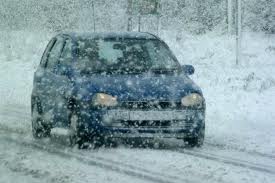
My last post ended with a cliffhanger – did I get snowed in or not when I drove my little city car (a friend calls it my “toy” car) up to my cabin? Some of you remembered that I have no Internet up there, so you properly surmised that I had made it home in order to post something on my blog. But there is a bit more to the story.

Although I had a lovely afternoon taking a long walk in the virgin snow, going down by the creek, and reading by the fire, I remained on the fence about whether to pack up and go home or stay overnight. After dinner and some more reading, I took one more look outside as the fire died down. There were a couple of inches of powdery snow on the ground, but the snow had been melting all day almost as fast as it came down. I went on to bed.

Friday morning I awoke early and looked out of the window by my head in the sleeping loft. Oh oh. Snow covered everything. I came down the ladder and looked at my car, completely covered with four to five inches. The snow on the ground reached up and touched the low riding bumper. The car looked disgruntled, and seemed to be saying to me, “I could be safe and warm in the garage right now, but nooooooo.” I felt guilty.

And anxious. I had gambled, but had I lost? Being snowed in on many days would not be a big deal. I could just wait it out. But I wanted to be back in town by late morning to meet up with a friend passing through town on business, a friend I had not seen in many years. This was my one window of opportunity to see her before she headed back to Europe.

I reassured myself that the worst case scenario was that I would have to do some shoveling to get the car up the long driveway to the one lane road, where I hoped the plow had made a pass through in the wee hours. I put on my coat and boots and walked up to see. Yes, the road was plowed, so once I got that far, I could get to the highway.

It was still snowing, and just in case the snow shovel was going to get some use, I decided to forego breakfast and get moving. I downed some juice and called it good. I swept the snow off the car and scraped the windows. I was packed up in no time.

Ignition on. Shift into drive. The car inched forward a few inches, and then a few inches more. Easy on the gas. Up the drive we went without hesitation. As we got to the top I saw that the plow had left a small ridge of snow across the drive. The plowed road was just beyond. A little more gas to get a running start. My toy car pushed right through, and soon I was on the highway headed home.

Now I felt foolish about the time I had wasted thinking about whether I would get snowed in and about what I would do if I did. Instead of a relaxing time at the cabin, I had spent a lot of my time uneasy. Fretting even though I knew that I would be able to get out one way or another. On top of that, I had skipped breakfast and I was hungry. All that thinking had no effect at all on how much it snowed or whether I would make it home on time. The only effect was to interfere with my being fully present, fully grateful, fully peaceful, fully joyful. Lesson learned.

If a problem has a solution, there is no need to worry. If a problem doesn’t have a solution, there is no need to worry. ~The Dalai Lama

related posts: It Is Not So; Expecting Ponies; You Have To Be Present To Win

Monday, February 25, 2013

Step Away from the Thought


Years ago, I was standing on the sidewalk in Paris chatting with a group of friends. When I moved toward the curb to let some people pass by, I was close to a parked car. Suddenly, a man’s deep voice boomed, “Step away from the car. Step away from the car.” I had never encountered a recorded voice car alarm like this, and I quickly put some distance between me and that car, much to the amusement of everyone who saw me yelp and leap back!

I was reminded of this incident recently when I read a passage in A Course in Miracles about developing the habit of engaging our minds with God, open always to divine presence, united with all beings in our sacred unity. We can develop this habit by actively refusing to let our minds “slip away.”

Our minds can slip away when we get caught up in regretting something from the past, or worrying about something in the future. We can slip away into resentment or blaming or shame or anxiety. Lately, I’ve been thinking about something that happened years ago when someone hurt my feelings. And about a different time when I let someone down. I can get stuck in these thoughts, turning them over and over in my mind, churning up distress.

Before I know it, I have slipped far away from the present moment, far away from God, far away from peace and joy. A Course in Miracles says that when we catch ourselves slipping away with these thoughts, we need not fight them or judge them or reject them. We can simply “step away from them.”

When we have realigned ourselves with the divine, then our inner wisdom will guide us rather than our fear. If action is needed, we will know what to do, and we will have the courage to do it. If stillness is needed, we will know that, too, and we will have the serenity to wait.

So now, when I catch myself getting too close to thoughts that do not serve me, I hear a gentle voice. “Step away from the thought. Step away from the thought.”

The sage lets go of that and chooses this. ~Tao Te Ching

related posts: You Are Here; Thought Camping

Thursday, February 7, 2013

Arrows into Flowers


My attack thoughts are attacking my invulnerability. ~A Course in Miracles

The story is told of Mara, the evil demon, who attacked Buddha as he was sitting under the tree where he became enlightened. Mara instructed his army to shoot all their arrows at Buddha, but as the arrows drew near, they turned into flowers and fell to the ground.

I have been thinking about this image a lot lately. I mentioned before that I have been struggling with a particular situation in my life that continues to challenge me, to keep me on the razor’s edge, to give me repeated opportunities to practice compassion, fearlessness, and forgiveness.

One of most disturbing aspects for me is the intense hostility that is directed at me and at one of my children. How do I keep my heart open towards this person and at the same time defend myself and my family from the negative energy that is hurled towards us with such rage? It’s like reaching out with one hand while raising the other hand in defense. It’s exhausting!

But then I remembered this story about Buddha and Mara. And the above quote from A Course in Miracles. Ah, the problem is in the concept of defense. Defense presumes attack. If I see myself as attacked, then it is natural to defend myself, even to attack in return. In fact, I’m not sure there is really a difference between defending and attacking. Both involve my seeing the other person as separate from myself. Both involve my judging that other person as a threat, as someone to be feared.

Buddha didn’t defend himself against the arrows of Mara’s army. There was no need. The arrows were no threat to him. What was intended for harm was harmless.

So when I feel disturbed by this situation, I’ve been trying a new approach. I picture the anger coming in our direction as arrows, arrows that turn into flowers and fall gently to the ground. They carpet the earth all around us with soft petals like the cherry blossoms in the spring that we call “pink snow.” No energy is expended; my heart stays open naturally; my spirit remains at peace.

He who knows how to live can walk abroad
Without fear of rhinoceros or tiger.
He will not be wounded in battle.
For in him rhinoceroses can find no place to thrust their horn, 
Tigers no place to use their claws.
And weapons no place to pierce.
Why is this so?
Because he has no place for death to enter.
~Tao Te Ching

related posts: The Circle with No Exit; The Dance of Fear; Forgiveness, the Final Frontier

[I will be away from my computer from later today until Saturday. Because I have comment moderation, there may be a delay in seeing your comments appear. Your comments are valuable and valued, so please leave your comment and be assured that I will publish it immediately upon my return.]

Monday, February 4, 2013

To Question or Not To Question?


I have a mystery for everyone today, or perhaps a koan. I was joining in a small group meditation a few weeks ago. Before the meditation started, we were all chatting and catching up with each other. I was describing my confusion about something I was trying to make sense of in my life.

At one point, I joked that I didn’t even know what the question was. Someone else piped up with this statement: “Whatever happens is the answer.” The person thought that was a quote from somewhere, but I can’t find it. At any rate, I’ve been mulling it over. Sometimes the statement just seems like nonsense, but other times it seems quite profound!

Toni Packer writes about being open with curiosity to whatever is going on. No judgment, just honest observing. Hmm, look at that. What does this feel like? See my reaction. Tara Brach writes about radical acceptance in much the same way – “A moment of radical acceptance is a moment of genuine freedom.”

In Shambhala training, we worked with the slogan, “Everything is workable.” This means that we bring everything into our practice. Everything and everyone become my teachers.

One of my tai chi instructors brings his dog to the early morning class. There are just a few of us in the room. The dog is big and friendly and mostly lies on her rug. But every now and then she wants to join in. She will walk slowly over to one of us and position herself right between that person’s feet. As the person shifts to the next posture, she will shift, too, staying right underneath. When I am her chosen partner, I have learned to adjust my stepping and my postures to include her in the form. It’s workable. Rather than interfering with my practice, the dog becomes my teacher.

At a certain level in quantum physics, scientists learned that the question will determine the answer in the experiment. Is this energy or mass? An experiment set up to measure energy will find energy to measure. Set up the experiment to measure mass, and mass magically appears, ready to be measured. So which is it? It is whatever the question seeks to find.

So what happens if we don’t question? Ha, that’s a question, too!

Ever desireless, one can see the mystery.
Ever desiring, one can see the manifestations.
~Tao Te Ching

related posts: The Best Exotic Present Moment; Close Encounters of the Brain Kind

Tuesday, January 29, 2013

The Circle with No Exit


No problem can be solved from the same level of consciousness that created it. ~Albert Einstein

I’ve been stuck for months in a thinking pattern about a certain situation in my family. When I think about it, I get upset. When I get upset, I want to “fix” the situation so that I won’t be upset. Fixing the situation involves getting the other people in this situation to behave in a different way, meaning, of course, the way I think best. If they would behave differently, then there wouldn’t be a problem and I wouldn’t be upset. It’s so simple.

As you can imagine, I’m not having much success with this approach. I know that, and yet I repeatedly return to it. It’s so easy and fall into that familiar pattern of making my own happiness and peace of mind dependent on someone or something else. I have to repeatedly remind myself that my well being is my own responsibility and is based on my own thoughts. When I remember this, then for a few moments I feel serene. Until I start to feel resentment towards the others for “making” me have to remind my self of this over and over. Sigh.

As my tai chi teacher observed, it’s a circle with no exit. As long as I am in that plane of consciousness, there will be attack and defense, gain and loss, us and them, winning and losing. And at the root of all of those...fear.

How do I get out of this circle? Ah, perhaps the solution is in the question. I can’t get out of the circle by searching the circumference for an opening. There is none. In accepting the reality of the circle, I’m accepting my confinement within it.

But what if I render the circle meaningless by shifting to a different plane, one where there is no us versus them, where this and the other dualities no longer exist? Where fear transforms from arrows into flowers like the evils hurled by Mara at the enlightened Buddha?

On this plane, the other people in my family situation are not sources of anger or frustration or anxiety. They are angels sent to me, leading me to my meditation cushion instead of my soapbox, opening my heart with compassion instead of closing it with judgment, teaching me to trust the basic goodness of the universe instead of my futile efforts to control it. And instead of feeling resentment, I am humbly grateful.

Here, there are no circles.

related posts: No One Wins in Court; On the Razor’s Edge

Sunday, January 13, 2013

Like Magic, Only Real


If you haven’t seen this commercial, take a look. It’s only 30 seconds.


We think these guys are silly to believe that turning their labels out will affect the trajectory of the football. And yet...

People have asked me about the dedication in my book, “To Todd, who found the part that looked like me.” Here’s the story.

Years ago, I was in the emergency room with a pain in my solar plexus that I described as a 12 to the doctor who asked me to rate my pain on a scale of 1 to 10. After the initial shock of being attacked from the inside out, and after finally getting some chemically induced temporary relief, I understood intuitively that there was nothing medically wrong with me.

I write those words “understood intuitively” like intuitive understanding was a common occurrence for me. It wasn’t. I’m a lawyer by profession and by calling. For most of my life I relied on what I could understand and defend through rational analysis, on what I could “prove” based on facts. Nevertheless, lying in that emergency room, I was sure that medical tests would reveal nothing. I was right. And I knew just as surely that I was going to die if I didn’t change my life. I couldn’t explain it, but I knew it.

My naturopath suggested that I consult Todd, whom she described as an energy healer. I was desperate enough to pick up the phone and call, and too embarrassed to tell anyone that I was going to pay someone who was no doubt some sort of crackpot looney. This was all way too woowoo for me.

At one point during our session, I suddenly felt something that defies description. The best I can do is to say that I felt a whoosh, like a sudden gust of wind, but on the inside. Afterward, when I asked Todd what happened, he said that among other energy healing techniques, he had done a “soul retrieval.” When pressed, he explained that he went to a place where there were parts of souls that had been lost, found mine, and returned it to me. With rising anxiety and incredulity, I challenged, “How do you know that part was mine? What if you put someone else’s soul fragment in me?” He replied calmly and matter of fact-ly, “It looked like you.”

Well, what can you say to that?!  I went on with my life, but there was a distinct and subtle shift that happened that day. True, I was doing many other things, too, to change my life. But my life did change, from one based in fear to one based in joy. Can I prove that what Todd did affected the outcome? No. But I can’t prove that it didn’t either. I came to accept that there are things that bring about greater joy and peace in our lives that I can’t explain through rational analysis.

Energy healing is way out there, I admit. But what about kindness? I can’t explain why kindness makes me happier, but it does. Forgiveness. Generosity. Smiling. Prayer. Gratitude. Meditation. Friendship. Compassion. Love. Faith. All these enrich my life and fill my (now retrieved) soul with light and joy. How marvelous. Like magic, only real.

As the commercial says, “It’s only weird if it doesn’t work.”

related post: Resolution or Revolution

Wednesday, December 19, 2012

Joy Comes


Weeping may tarry for the night, but joy comes with the morning.  –Psalm 30:5

Once again, I find myself nearing the end of the year...surprised. Last thing I remember, it was Thanksgiving, and now poof!  Christmas is almost here with the new year close behind. I will join others in reflecting more personally on this year, but today I want to offer one more post on what seems to me to be one of the prevalent qualities of this year.

Fear. And fear’s spawn – anger, hatred, judgment, anxiety, greed, blaming, isolation, selfishness, vengeance, stress.

We saw a year full of violence all over the world and in our own back yards, shattering not only lives but also innocence. In the United States we watched as a fiercely bitter political climate continued to polarize our country, with no end in sight even now. Nature added to the devastation with storms reflecting the human climate.

What to make of a year like this? I loved what Julie Barrett of A Clear Sign said in a comment to my last post. “I actually feel more hopeful. It feels to me as if there has been a huge shift in energy to the positive. I'm not sure why that is - it just feels that way to me.”  Me, too.

There is something so radiant and resilient about the human spirit.  Something in us, sometimes in our darkest hour, reaches for the light and transcends the fear that would keep us shackled in the pit.  We can all think of examples, some that are known only to a few, some that inspire nations and even the whole world.

I need not look further than my own family. I think back to when Dan joined our family. He was a classmate of my son James, both in a special classroom because of their autism. When Dan was 14, his parents died within a few months of each other. They were refugees from Vietnam who came to the US after the war and Dan had no other family here. And so he became part of our family.

He was a 14 year old boy with autism and limited communication skills, an only child who had known only one home, with a family who loved him and protected him from the things in the world that he didn’t understand. Then suddenly he lost everything and everyone he ever knew and loved, and was thrust into that very world. He came to a new home, filled with strangers, with new food, new language, and a dog that terrified him.

It’s more than many of us have ever had to cope with, especially at a young age, and many of us have more obvious coping resources than he had. Yet Dan was not down for long. He quickly adapted and soon his sunny nature was beaming again. Dan has a zest for life that many of us aspire to. It never bothers people when they can’t understand him. They respond to his open spirit and his eagerness to be friends. He is my hero of indomitability, a phoenix rising from the ashes of the life he was forced to leave behind.

So like Julie, I am filled with hope because I know what we are made of, we humans. I know what we can do when we move through our fear and let our lights shine. And how do we do this? By heeding the lesson this young warrior learned.

A young warrior once had to battle fear.  She did not want to, but her teacher insisted.  On the day of battle, the warrior stood on one side, feeling small.  Fear stood on the other side, looking big and wrathful.  The warrior bowed to show respect and asked fear, “How do I defeat you?”  Fear thanked her for showing respect and replied, “My weapons are that I talk fast and get in your face.  Then you get completely unnerved, and you do whatever I say.  If you don’t do what I say, I have no power.”

As we wrap up this year, let’s respectfully refuse to do what fear tells us to do. Let’s move towards the morning of the new year with an open hand reaching out, with sadness perhaps for what has been lost, and joy in our hearts for what is to come. Blessings to us all.

related posts: It Is Not So; Game Change

Sunday, November 25, 2012

Wonderfully Made


I am fearfully and wonderfully made.  –Psalm 139:14

When I led a women’s retreat last year, we were talking about compassion for ourselves.  I was struck by how difficult it was for some women to use positive words to describe themselves.  When asked to describe themselves the way they would be described by the person who loved them more than anything in the universe (this could be a parent, dearest friend, God, their dog, anyone), there was a palpable discomfort in the room.  Describing themselves in glowing terms seemed not only unfamiliar, but even wrong, smacking of pride and arrogance.  Much better, they thought, to minimize their gifts, to deny their talents, to put themselves down.

But false modesty is just that – false.  Legendary martial artist Bruce Lee was once asked if he was really “that good.”  He replied, “If I say yes, you will think I am arrogant.  But if I say no, you will know I’m lying.”

The Bible says we are God’s masterpiece.  Far from feeling arrogant or prideful, I am brought to my knees in humility and gratitude when contemplating this precious gift of human life, a gift that is not mine alone, but is generously bestowed on each of us, binding us together in our shared magnificence.  Why is it so difficult to acknowledge the amazing wonderfulness of our existence?

At a conference with Western Buddhists, the Dalai Lama was asked about self hatred.  Even after repeated efforts by his interpreter, the Dalai Lama remained confused by this concept.  What was immediately understood by the Western attendees was so unfamiliar to His Holiness that he finally conceded,  "I thought I had a very good acquaintance with the mind, but now I feel quite ignorant. I find this very, very strange."  What this tells me is that self hatred is not a necessary aspect of the human condition, but rather is culture specific.

Where does self hatred as a cultural phenomenon come from?  I’ve been giving this a lot of thought since that women’s retreat last year.  Some might trace its roots back to the doctrine of original sin, a concept perhaps unique to Christian theology.  Seeing ourselves as inherently and inescapably flawed from birth is a heavy burden.  One might also consider gender issues, since the affliction seems more prevalent in women.

Ultimately, however, the cultural origin of self hatred is less important than the fact that, because it is not an inevitable part of who we are, we can choose differently.  That’s tremendously liberating.

Jesus said that we are the light of the world.  “People do not light a lamp and put it under a basket, but on a stand, and it gives light to all in the house.  In the same way, let your light shine before others....”  I want my thoughts and words and actions to reflect that light of glory.  I do no service to others by pretending to be less than what I am, a masterpiece of the universe, as are you.  That doesn’t make us special.  It makes us part of everything that lives.

So I invite you to try the exercise I mentioned above.  You can do it privately if you don’t want to share publicly – that’s fine.  How would the person who loves you more than anyone describe you?  Can you accept that description without apology or denial?  If you don’t want to share the description in a comment, would you share what the exercise was like for you?  Is it hard to let your light shine?  No judgment.  Just be curious.

You could search the whole world over and never find anyone as deserving of your love as yourself.  –Buddha

related posts: From Victim to Victor; The Perfection of Imperfection; Guided Tour

Wednesday, November 7, 2012

It Was the Best of Times. It Was the Worst of Times.


Which is it?  Depends on who’s talking.  Half the U.S. is jubilant today.  The other half is devastated.  Some of the disappointed voters even threaten to move to Canada, where, ironically, they will find same sex marriage, a single payer national healthcare system, and abortion on demand.  I’m just sayin’....

Our planet is in great trouble and if we keep carrying old grudges and do not work together, we will all die.  –Chief Seattle

The truth is that it doesn’t really matter who won the presidential election yesterday, unless we can quit demonizing those who don’t agree with us and work together.

Picture two enemies in a canoe arguing about the best technique for paddling, or even trying to knock the paddles out of each other’s hands, as the canoe is swept downstream towards a waterfall.  That’s what our polarized partisanship reminds me of.

Don’t fight a battle if you won’t gain anything by winning.  –General Patton

Yesterday’s win will be a hollow victory if the real danger to America is not addressed.  The real danger is not the deficit or terrorists.  The real danger is our refusal to see that we rise or fall together.  When Hurricane Sandy laid waste to the East Coast, first responders did not ask a victim’s party affiliation before offering help, and victims did not vet their saviors for political correctness.

Years ago, when two of my daughters were gridlocked in bitter hostility, I, in desperation, offered to pay them each a dollar a day to get along.  I didn’t care anymore if they liked each other, or if their overtures were sincere.  I cared that the fighting stop.  Here was the catch: they would have to earn the dollars as a team.  They either both got the dollars or neither did.  I was the decider, and there was no appeal.

The amazing thing was that although their initial efforts were only superficially civil, the pattern was broken, and it wasn’t long before they really were working together toward a common goal.  Did disagreements still arise?  Of course.  But they quickly shifted to cooperative solution mode rather than getting all churned up in their previous blame/attack mode.

Again, I’m just sayin’....

We have seen the enemy and he is us.  –Pogo

There is nothing like watching the election returns with a friend who comes from a communist country to put things in perspective.  As I spent the evening trying to explain what was happening to someone for whom the whole concept of voting is unfamiliar, I could see the process from an outside perspective.

True, in her country there are not billions of dollars spent on campaigns, and government policies can change without endless debate and years of court challenges.  But as I listened to her amazement that people could voice their opinions so freely, and her disbelief that those numbers on the screen represented individual votes that were actually being counted, I felt blessed.

People with clenched fists cannot shake hands.  –Indira Gandhi

Maybe you feel blessed, too.  So I invite us all to consider how we participate in and how respond to our electoral process.  Although our system is based on a win/lose model, no one really wins unless we all win.  Instead of all the vitriol and gloating, I invite us all to find someone who voted for “the other guy” and extend an open hand.  More important, I invite us all to extend an open mind.

From this house, to the world, we will go, hand in hand.  The way of peace, the way of freedom, the way of hope, from this house, to the world we will go, hand in hand.  –Ben Allaway

[Note to my friends from other countries: I try to write about things that will be of universal appeal.  This post is clearly about the U.S. presidential election, but I hope that there is something here that you might find relevant on a broader scale.  Thanks for reading.]

related posts: Righteous Unforgiveness; There Is No Them

Monday, October 22, 2012

The Best Exotic Present Moment


Everything will be all right in the end.  If it’s not all right, then it’s not the end.  –Sonny, The Best Exotic Marigold Hotel

In the movie The Best Exotic Marigold Hotel, a group of British retirees comes to India to stay in what has been advertised as a newly restored hotel.  However, they arrive to find a dilapidated relic run by the ever hopeful Sonny.  Each deals with the unexpected challenges and unfamiliar culture in his or her own way, some embracing the circumstances, some recoiling from them, but all finding some new level of self awareness in the process.

Each of the characters reminds me of various ways that I deal with the present moment. Sometimes the present moment is not what I was anticipating.  In my zen mode, I can open myself up to the gifts of the holy instant, but I’m just as likely to balk, to judge, to try to change it, to escape, to pretend it’s something other than what it is.

When the present moment lands in circumstances not to my liking, I can feel fear start to beat like the orc drums deep in the mines of Moria.  I begin to search for some way out of my unease.  The drums grow louder.  Panic clutches at my throat.  I sometimes flee, or I turn to fight, making a powerful enemy out of what I can’t control.

Ah, what a waste, losing faith like that.  If I believe, and I do, that all things work together for good, then, as Joel Osteen says, things are not happening to me, they are happening for me.  It might not look that way, but the Bible cautions me to not lean on my own understanding, but rather to walk in faith and not by sight.

I’ve lived long enough to discover that events I initially judged as terrible turned out to be wondrous blessings.  What if I had been able, in the time of trouble, to trust in the basic goodness of the universe, to rest in knowing that the pain would pass, to be grateful for the perfection of every present moment?

Like guests at a hotel, we can look on the back of the door at the map with the red arrow pointing to a spot that says “You are here.”  Indeed we are.  It’s the only place we can be.  And it’s more than all right.  It’s perfect.

related posts: Falling Into Now; You Are Here

Friday, September 7, 2012

My Half of the Bargain

I will fight no more forever. –Chief Joseph

I have read several blog posts in recent weeks focusing on the choice to be right or happy. Then yesterday, I picked up the book I’m reading and there it was again. Okay, universe, you have my attention.

Indeed, once I stopped and thought about it, the relevance of this issue to my life right now became immediately apparent. Since I wrote several weeks ago about an upsetting incident, I have continued to replay the event in an endless loop. Tension remains in my spirit, causing me discomfort, motivating me to explore ways to restore peace, frustrating me when no solution seems available.

The Tao Te Ching counsels, “After a bitter quarrel, some resentment must remain. What can one do about it? Therefore the sage keeps his half of the bargain but does not exact his due.”

Hmm. What can I do about it? Well, I can’t go back and change what happened. I can’t control what anyone else thinks about or does in response to what happened. There’s the rub. I want to restore my inner peace by “fixing” what is out there, beyond my control. So what can I control? My “half of the bargain.” What does that mean?

For one thing, it means dropping labels. In his book, The Ultimate Happiness Prescription, Deepak Chopra says, “No one has ever been made happy by proving that they are right. The only result is conflict and confrontation, because the need to be right always makes someone else wrong.” As soon as I attach right and wrong labels, I have separated myself from the other person. Peace is no longer possible.

For another thing, my half of the bargain means taking myself (my ego) out of the story, realizing that it really isn’t about me. As soon as I react in fear or anger, as soon as my feelings get hurt, as soon as I start trying to fix things or wanting the other person to behave in a certain way, then I have made the issue about me. I have made myself important. And I have made my well-being dependent on what happens “out there.” This only maintains the struggle.

I am reminded of a conflict I was engaged in years ago. Every effort I made to negotiate a settlement was met with resistance and counter demands I was not prepared to agree to. Finally, I gave up, fully expecting to be sued. Miraculously, the conflict vanished. I realized that I had prolonged the conflict by trying to force peace.

A Course in Miracles teaches, “Mistake not truce for peace, nor compromise for the escape from conflict. To be released from conflict means that it is over. The door is open; you have left the battleground.” That’s what I want to do. Leave the battleground. I’m still energetically engaged in a situation now past. I may have left the physical battleground, but the battle continues in my spirit. My desire to be right masks the fear that perhaps I’m not.

Instead, I see that the question of who is right and who is wrong is itself meaningless and only serves to sustain the artificial divide between self and other. I’d rather have an open hand than an upper hand. So I’m walking off the battleground. It’s over.

Peace I leave with you; my peace I give to you. Not as the world gives do I give to you. Let not your hearts be troubled, neither let them be afraid. –John 14:27

related posts: The Way of No Way; Beyond Right and Wrong; No One Wins in Court

Thursday, August 16, 2012

The Dance of Fear

If we truly wish to learn, we should consider enemies to be our best teacher! –The Dalai Lama

I was involved in a situation a few days ago that I have been deeply reflecting on since. The details of the situation are not important. My reaction to the details is.

What happened is that someone behaved in a way that triggered fear in me. The fear in turn manifested as anger. Fear often does this because we don’t like to experience the vulnerability of fear, so we opt for the delusion of power in anger. My anger manifested in an attempt to control what I could not control – someone else.

Pema Chodron tells the story of a young warrior who had to battle fear. She did not want to, but her teacher insisted. On the day of battle, the warrior stood on one side, feeling small. Fear stood on the other side, looking big and wrathful. The warrior bowed to show respect and asked fear, “How do I defeat you?” Fear thanked her for showing respect and replied, “My weapons are that I talk fast and get in your face. Then you get completely unnerved, and you do whatever I say. If you don’t do what I say, I have no power.”

Looking back at my own behavior, I see that I was doing exactly what fear was telling me to do. So was the other person. We were engaged in a dance of fear, whirling and jumping like puppets, with fear as the puppet master.

At the time, of course, I did not see this. What I saw was my own story that the other person was doing something wrong, creating a problem that I, in my righteous fury, was going to correct. In fact, my fury only served to add fuel to the fire. The dance accelerated. I was in a vortex of chaos.

Later, in the safety of my own home, I was teary and trembling. I could feel the effects of the tsunami of adrenaline that my terror had pumped into my body. I began to reflect on my own behavior. The first thoughts that came to me were judgmental. What’s wrong with me? What good is all my inner work if, in the heat of the moment, my training fails and I react in fear? How can I write about and teach the 10 Steps if I am such a poor model of applying them?

Then I saw what I was doing, but I didn’t change course. Wow, look at how judgmental I’m being against myself. I can’t even feel compassion for myself or forgive myself. I’m such a fraud. I can’t follow any of the steps when it really counts. What a loser. I might as well just give it all up.

Talk about a meltdown. I felt embarrassed, ashamed, inadequate, unworthy, hopeless. I went to one of my spiritual teachers and began to “confess.” I opined that if I had just paused to take a belly breath before reacting, I would have behaved differently and the outcome of the situation would have been so much better.

He listened quietly, and then said gently, “Who do you think you are? You are talking about your anger, your fear, your power to affect the course of events. Why is all this ‘you’? There is just fear. There is just anger. How do you know if it is good or bad? It was there and now it’s gone. Now you are here. This is where your practice is.”

My body relaxed. My mind stopped spinning its looping tale. Oh.

Compassion was released. And forgiveness. I thought about the other person and how terrified and cornered he must have felt himself, exactly the way I felt. He wasn’t my enemy. He was my brother.

I realized that indeed, this is where my practice is. On the razor’s edge. Not where I feel comfortable about my “serenity skills,” but rather where I have an opportunity to expand, to reach further, to keep my heart open when fear is up close in my face, talking fast.

Who knows if what happened was good or bad? Unpleasant, yes. Scary, yes. But I’ve learned more than I knew before. In an odd way, I’m humbly grateful for the experience.

Perhaps next time, I’ll pause and take a breath.

You meant it for harm, but God meant it for good. –Genesis 50:20

related posts: It Is Not So; Breathing Like a Baby; Which Wolf are You going to Feed?